LIQUIDWAVE for Mac · Styles
Graphic: a geometric music visualizer for your Mac.
Updated 7 October 2026
Graphic turns music into printed pattern: rings, dots, checks, and the figures sand and water make when they vibrate. It is a geometric music visualizer in the poster tradition, flat, high in contrast and exact, and the sound moves the pattern rather than lighting it up.
One idea: a pattern the music prints
Each Graphic scene is one pattern that fills the frame: concentric rings, a dot screen, a grid, a checkerboard, nodal lines, standing waves. Two come from physics, where sound makes geometry on its own: Ernst Chladni's sand on a vibrating plate in 1787, and the waves Michael Faraday found on a shaken liquid in 1831.
The music drives the variable the pattern already has, the mode of the plate, the drive of the liquid, the height of the swelling, so the picture changes the way the real thing would. The drums answer in shape: a kick thickens a line, packs the rings or raises a swelling. Chladni, Halftone, Faraday and Vega also cycle slowly through a few palettes, starting from black and white.
The scenes
In the order the app lists them:
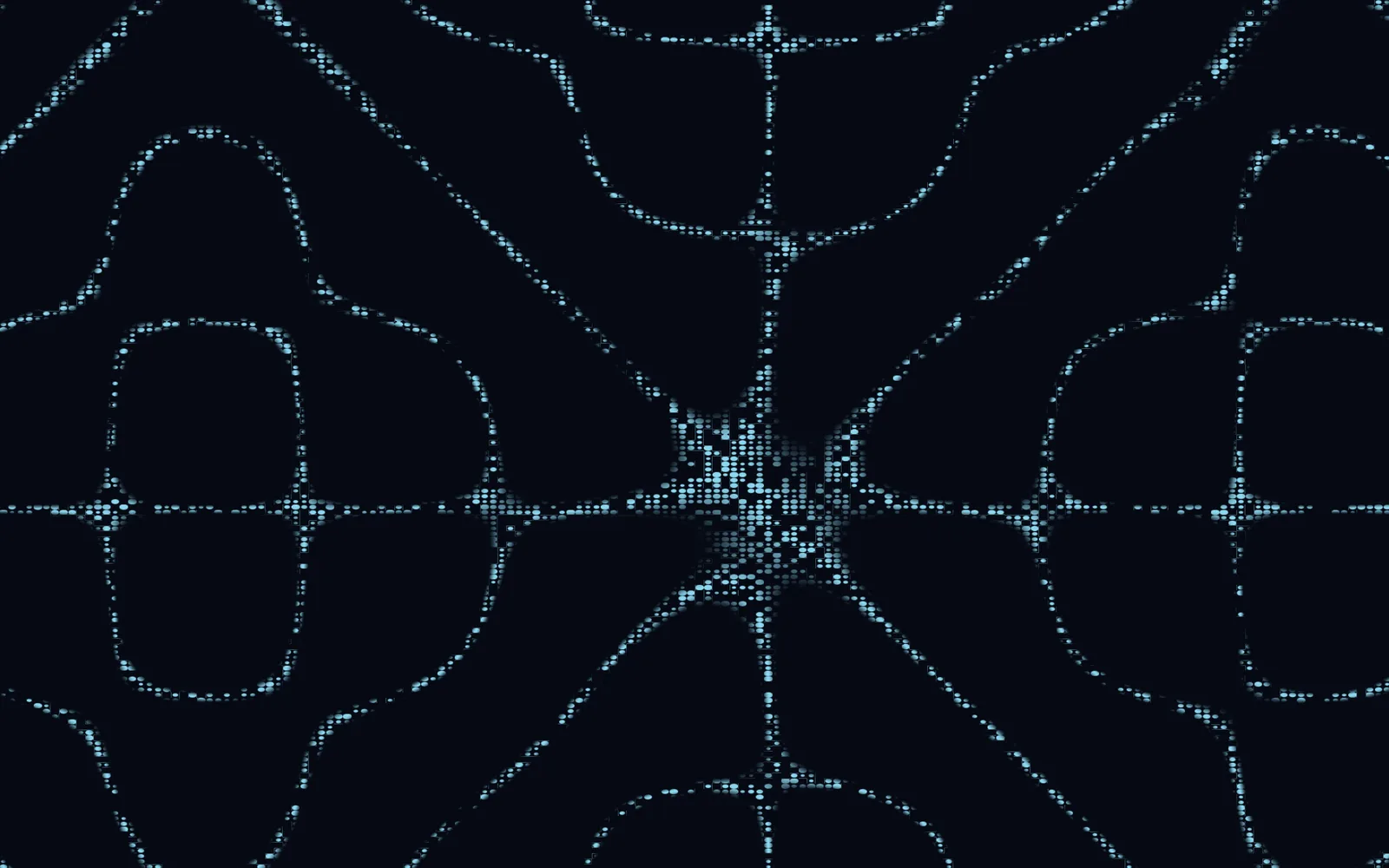
Chladni. Sand figures: grains gather on the lines where a vibrating square plate stays still. Eight pairs of modes cycle slowly, from pinwheels to grids, stars and rosettes. The high frequencies shiver the lines, a kick thickens them and brightens the sand, and a snare jolts the plate into a neighboring mode, so the figure jumps and settles.
Halftone. A dot screen like a comic-book print, its density rolled by three crossing waves that advance with the tempo. A kick makes the ridges roll harder and the dots thicken, and a snare sends a band of swollen dots across the sheet from corner to corner.
Lattice. A Swiss grid of dots, 72 across and 40 down. Every beat drops a shockwave at a random point. The ring knocks each dot out of place as it passes, and each one springs back to its coordinate. A kick sends a ring across the whole grid, a hat barely a ripple.
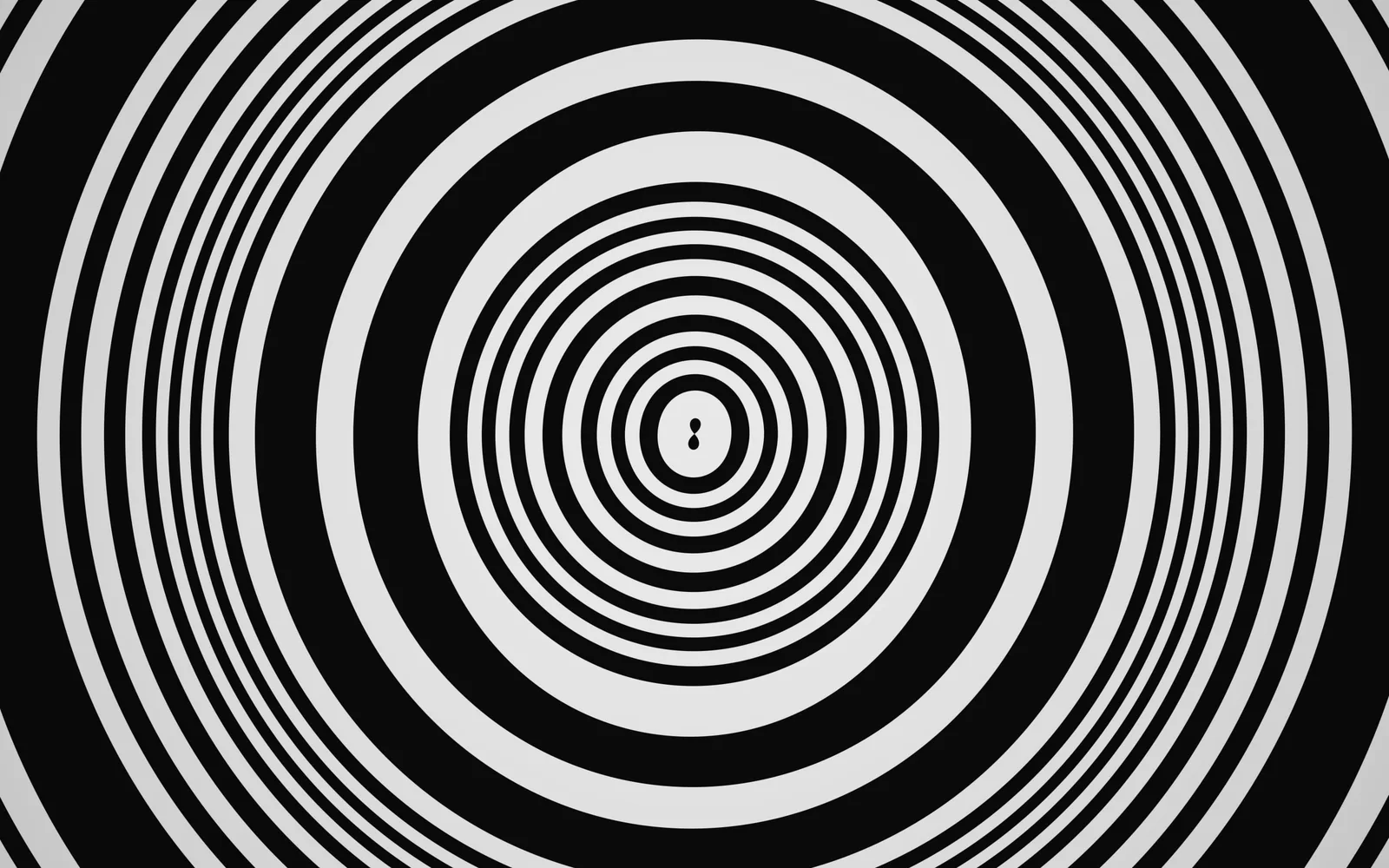
Op Art. Concentric black and white rings in the manner of 1960s op art. The bass makes them breathe, a kick packs them tighter and a snare sends a shock out through them. The warp stays almost purely radial on purpose: a strong twist makes a pattern like this read as tumbling, which is uncomfortable to watch.
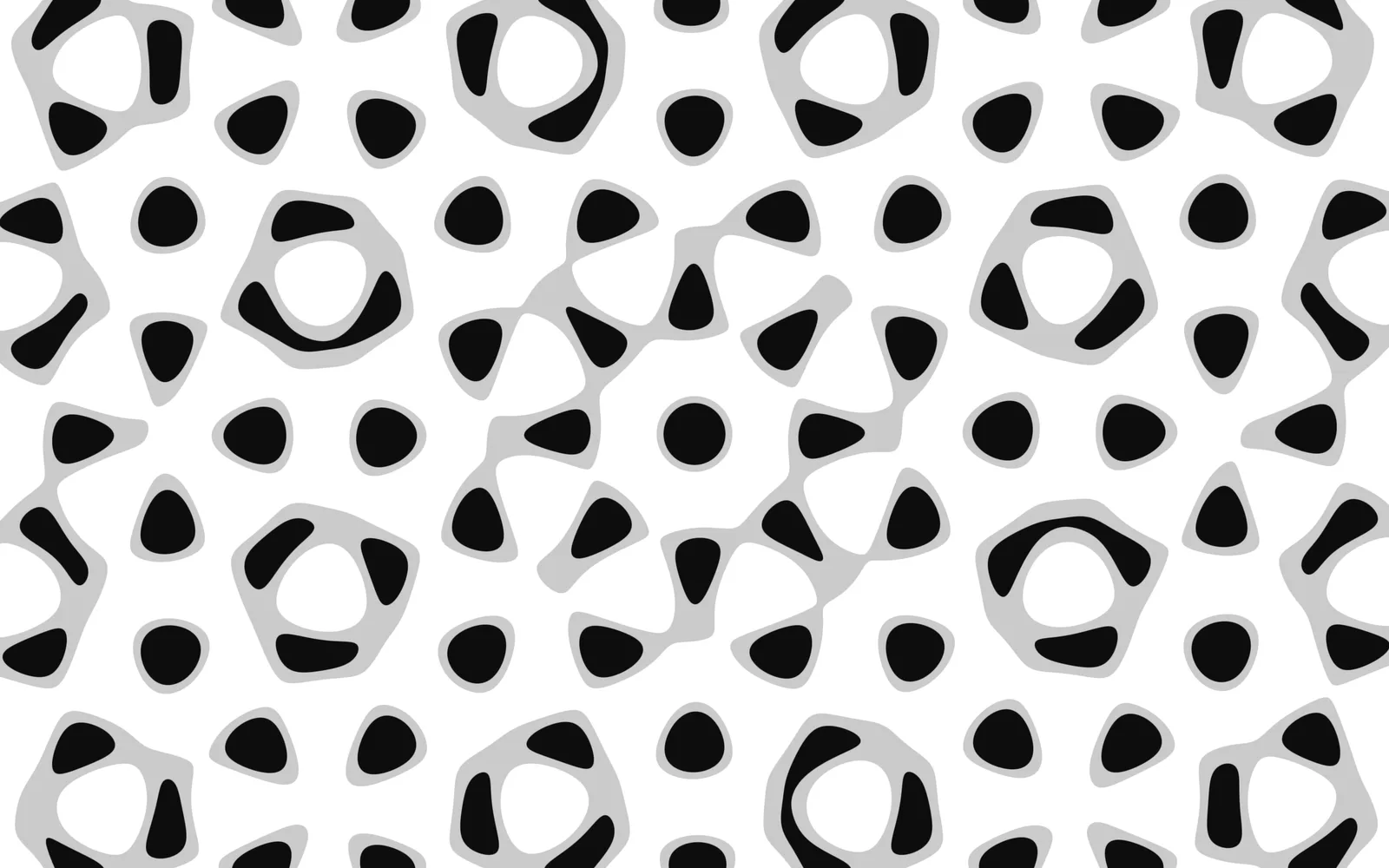
Faraday. New in 1.1. The standing waves Faraday found on a liquid shaken from below, which Hans Jenny later photographed for Cymatics, printed in ink on paper. The louder the passage, the richer the lattice: stripes in a quiet one, then squares, hexagons and, at full drive, a twelve-fold pattern with a rosette in the middle. New waves grow in among the old rather than cutting over. Every kick or snare, or a click, drops a ring of waves that runs out through it.
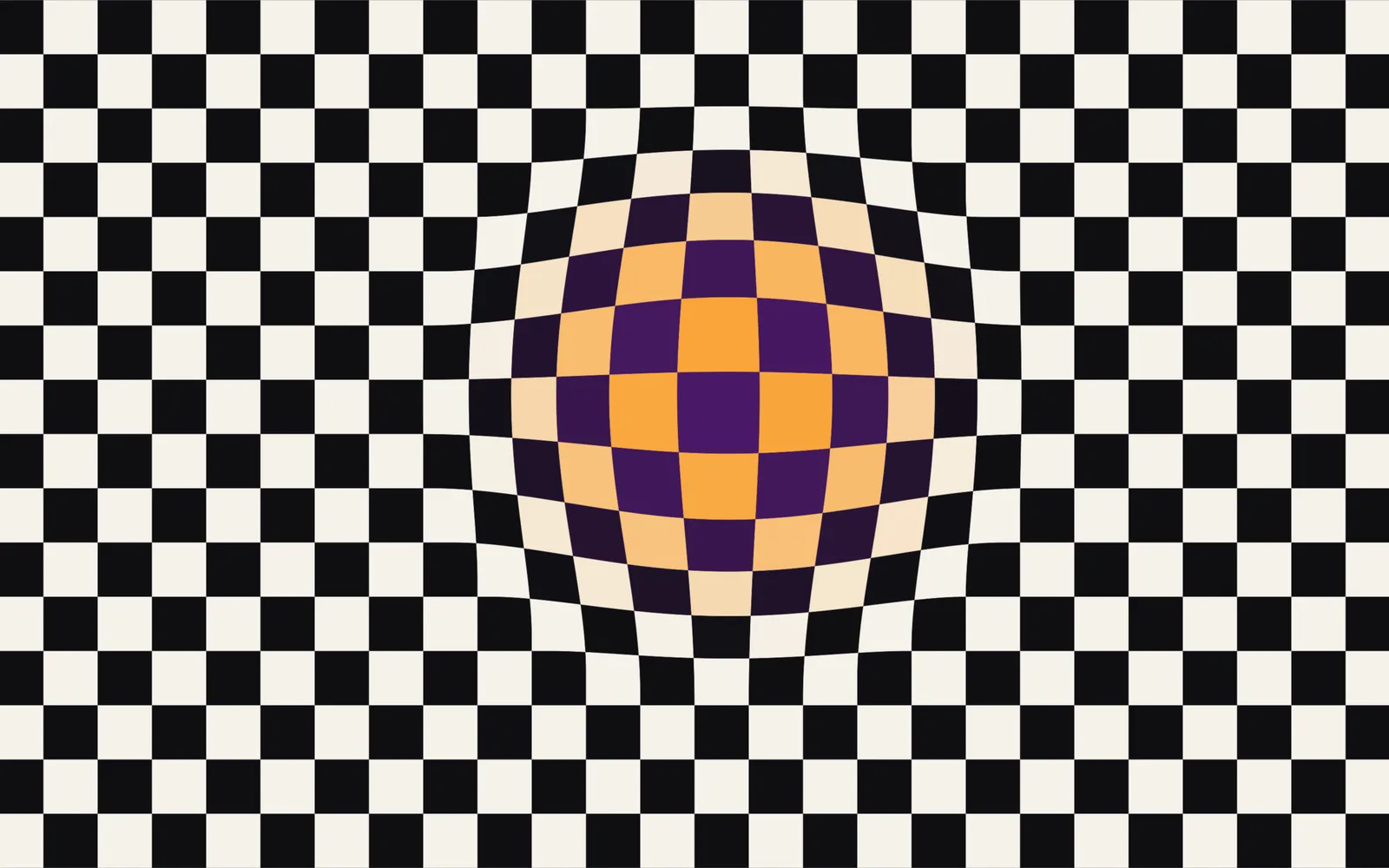
Vega. New in 1.1, after Victor Vasarely's Vega paintings. A flat checkerboard swells out of the canvas as if a sphere were pressing it from behind, and the cells turn from black and white to violet and orange as they rise. The low end is the swelling, the beat pushes it a little further, and every kick or snare raises a smaller one where it landed.
Solids, which used to be here, moved to Line in 1.1.
With different music
Graphic reads a passage more than a beat. Faraday's symmetry follows the loudness of the last second or two, so a song's quiet verse prints stripes and its chorus the full rosette. Vega's swelling grows through a bass-heavy section. Chladni moves through its figures faster when the music is louder. Halftone's ridges roll at the tempo, quicker in a quicker song.
Lattice is the exception. It answers beats and nothing else, so it stays still through an ambient piece with no pulse and turns busy under a dance track.
With Graphic chosen in the Styles panel and Shuffle on, LIQUIDWAVE plays every Graphic scene once before any comes round again.
What Graphic won't do
Much of Graphic is printed on white. Faraday is ink on paper, Halftone's dots sit on a pale sheet in its first palette, and Op Art and Vega are half white, so in a dark room these scenes light the walls the way a page under a lamp does. Chladni draws on a near-black plate and suits a dark room better.
In silence most of the style comes to rest. Lattice stands still by design, Faraday settles to plain stripes and Vega's sheet lies nearly flat. A quiet passage prints simpler figures too, so a soft record can spend most of its length in Faraday's stripes and squares.
A free scene
Wave, in Line, is free for good. The free download also includes one more scene you pick, and it can be a Graphic scene. One purchase unlocks the rest, inside the app.
The other styles
Graphic is one of ten styles across 60+ scenes. Line draws the music with a single pen. Wire builds it in 3D wireframe. Raster turns it into point clouds and data. Fluid puts a black magnetic liquid on white paper. Every style is on the styles page.
macOS 14.2 or later · notarized by Apple · free
Questions
- Do Chladni and Faraday follow real physics?
- Yes. Chladni draws the lines where a vibrating square plate stays still, from the equation for its modes, and Faraday sums standing waves the way they form on a liquid shaken from below. The music sets the mode, or how hard the liquid is driven.
- Why does Lattice stay still?
- Lattice answers detected beats and nothing else. Silence, or music without a clear pulse, leaves the grid at rest, and every beat sends a ring across it.
- What is new in Graphic in LIQUIDWAVE 1.1?
- Two scenes, Faraday and Vega. Solids, which used to be in Graphic, moved to Line.
- Can a Graphic scene be my free scene?
- Yes. The free download includes Wave, from Line, and one more scene you pick from any style, Graphic included. One purchase inside the app unlocks the rest.