LIQUIDWAVE for Mac · Styles
Cyber, a synthwave music visualizer in neon.
Updated 7 October 2026
Cyber is LIQUIDWAVE's neon style: perspective grids racing to a horizon, glowing wireframe ridges, phosphor streaks and falling glyphs, drawn in magenta, cyan and green on black. It is the synthwave corner of the catalog, and like every scene in LIQUIDWAVE for Mac, it moves with whatever your Mac is playing, heard through System Audio or Listen Mode.
Forward, never back
Everything in Cyber flies toward you. The floors, the runway, the corridor and the streaks travel on counters that only climb, with loudness and with each drum hit. A loud passage speeds the flight, a kick lurches it forward a notch, and a change of tempo changes how fast it goes, never which way. Nothing runs backward.
The light answers the drums. Kicks flare the grids, snares flash the horizon, and the hi-hats work on the small things: stars, lit windows, the grain, the glyphs. LIQUIDWAVE hears each drum separately, so a bar of kick, snare and hats plays out across the picture rather than as one pulse. How it listens explains the detection.
Every Cyber scene
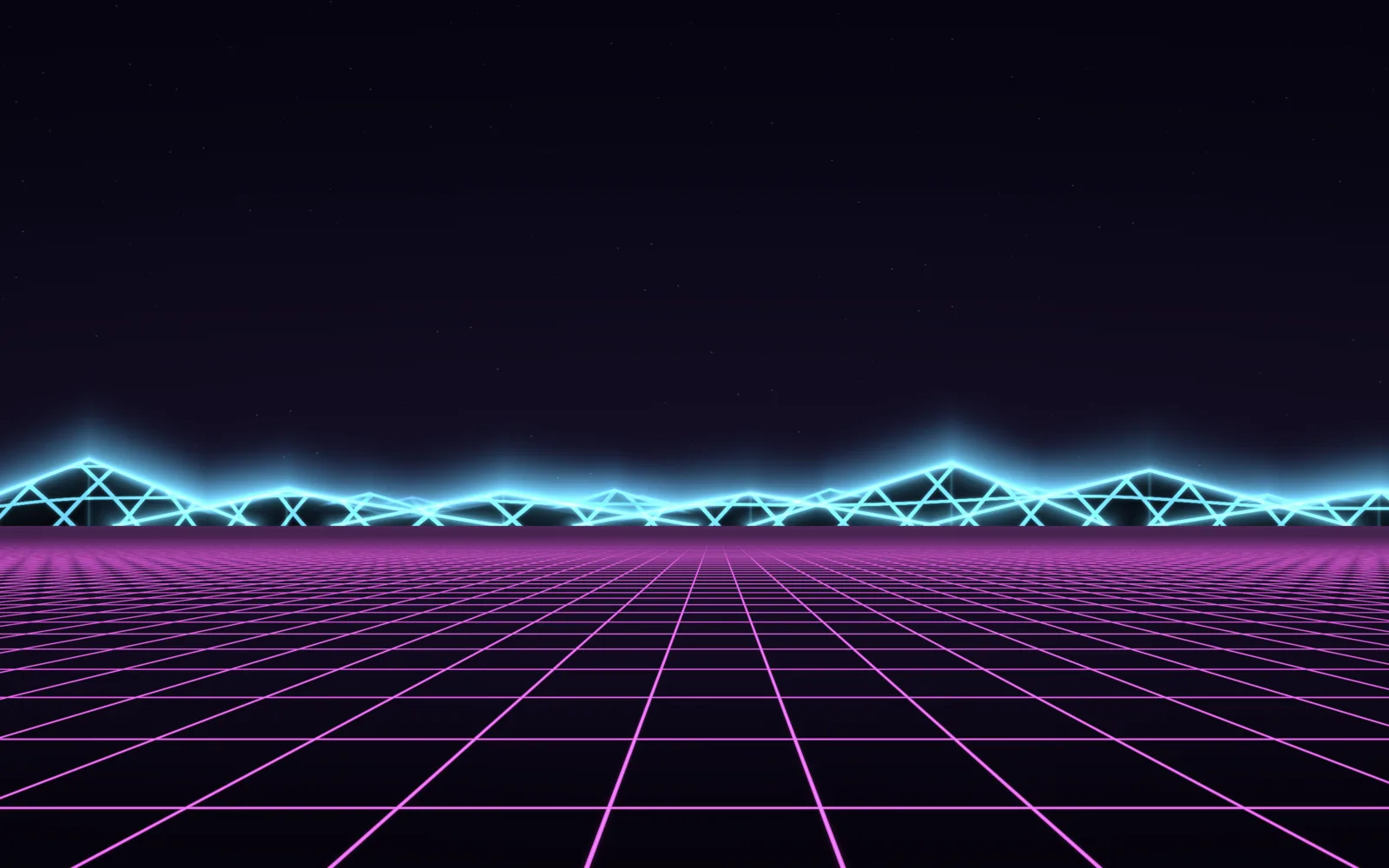
Synthwave. A magenta grid floor scrolls toward you under a deep purple sky, with three layered ridges of low-poly cyan mountains across the middle distance. The floor is polished, so it reflects the sky. The ridges themselves stay still, and their glow does the moving: a wave of light travels along the ridge line on loud passages, a kick flares the halo and the grid and pushes the floor forward, a snare flashes the seam at the horizon, and the hi-hats twinkle the stars.
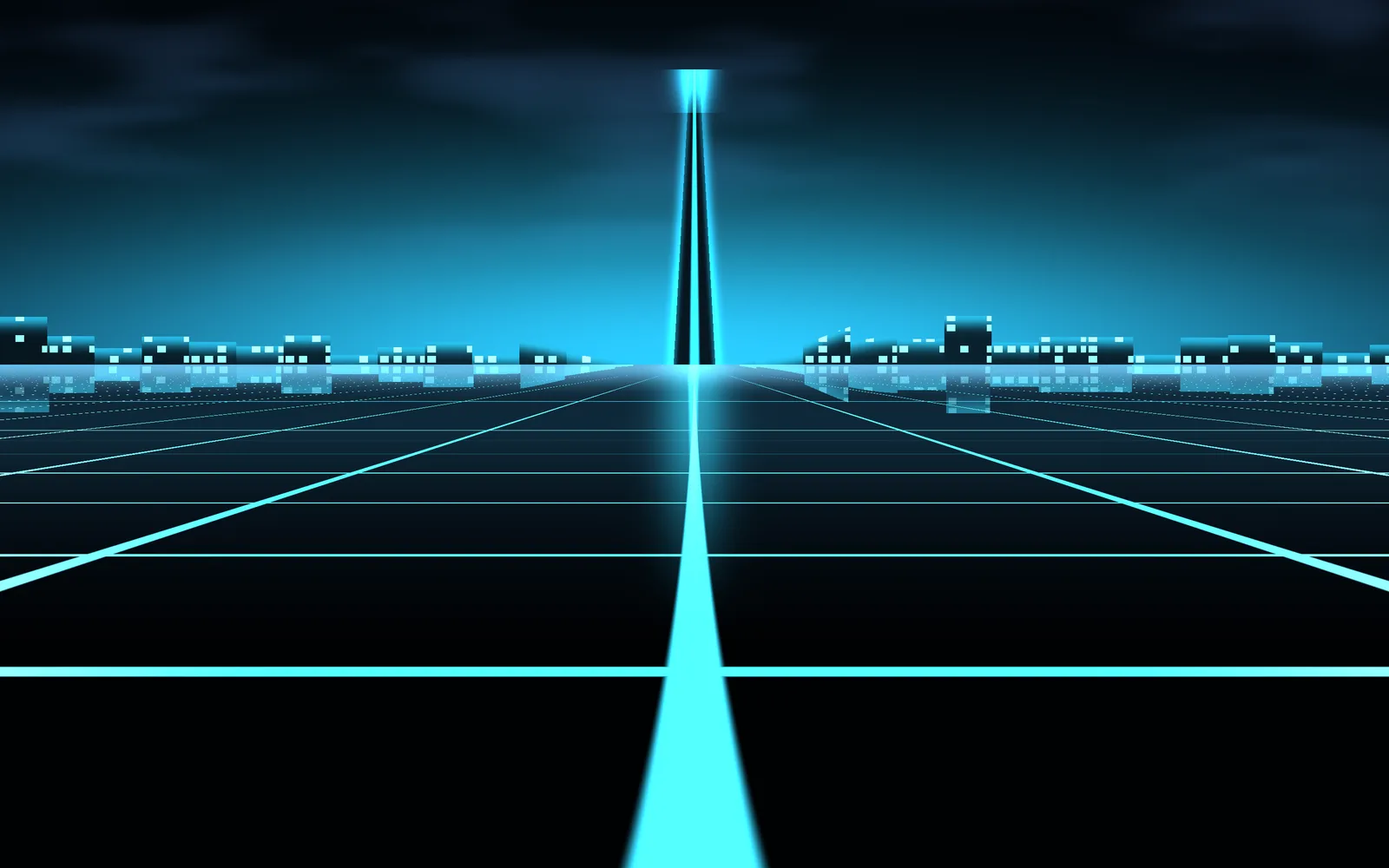
Cyber World. A single spire rises from a low skyline under dark cloud, at the end of a bright runway across a wet, reflective grid. The bass scrolls the grid, and loudness lights the runway and the slit up the spire. A kick flares the grid and flashes the horizon magenta, a snare lights the spire's tip and the horizon cyan-white, and the hi-hats flicker the skyline's windows.
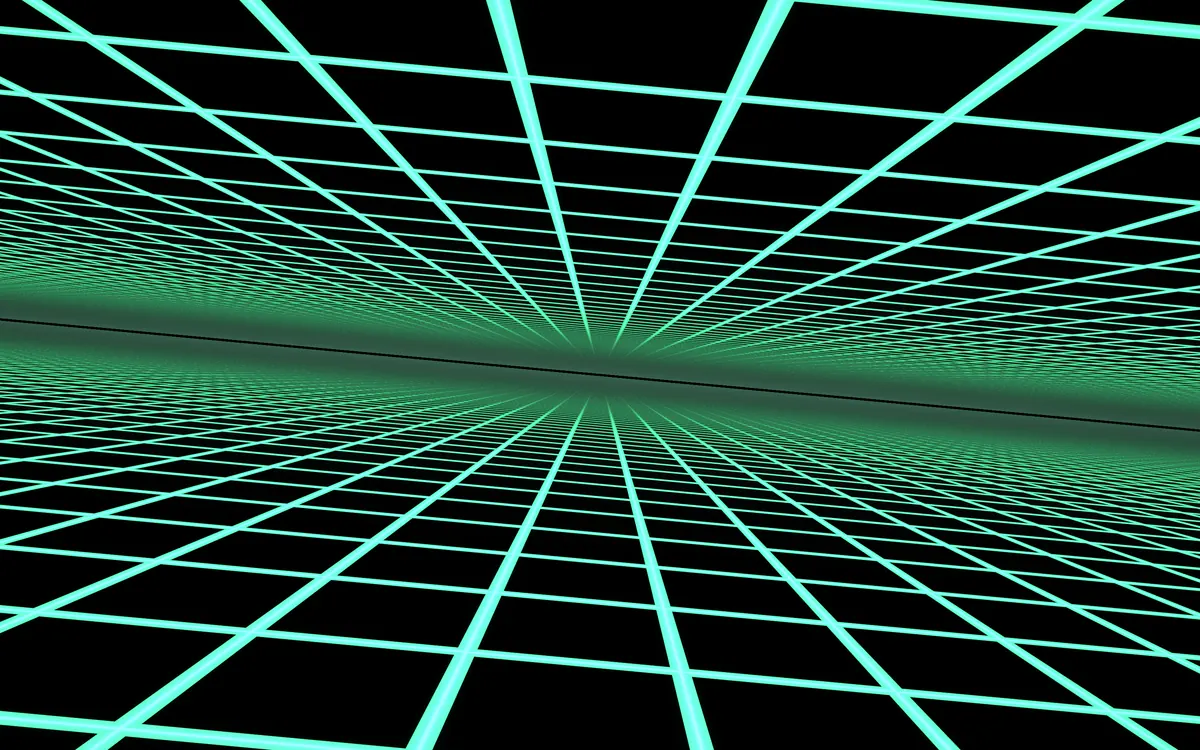
Cyber Grid. Two neon-green grids, one above and one below, meet at a central horizon, so you fly down an endless corridor. Loudness sets the speed, and while music plays the corridor slowly rolls clockwise around you, again only ever one way. Each kick flares the filaments and turns the halo at the horizon magenta, a snare flashes it white-cyan, and the hi-hats thicken the lines. In silence the corridor creeps forward and the distant light dims to a faint glow.
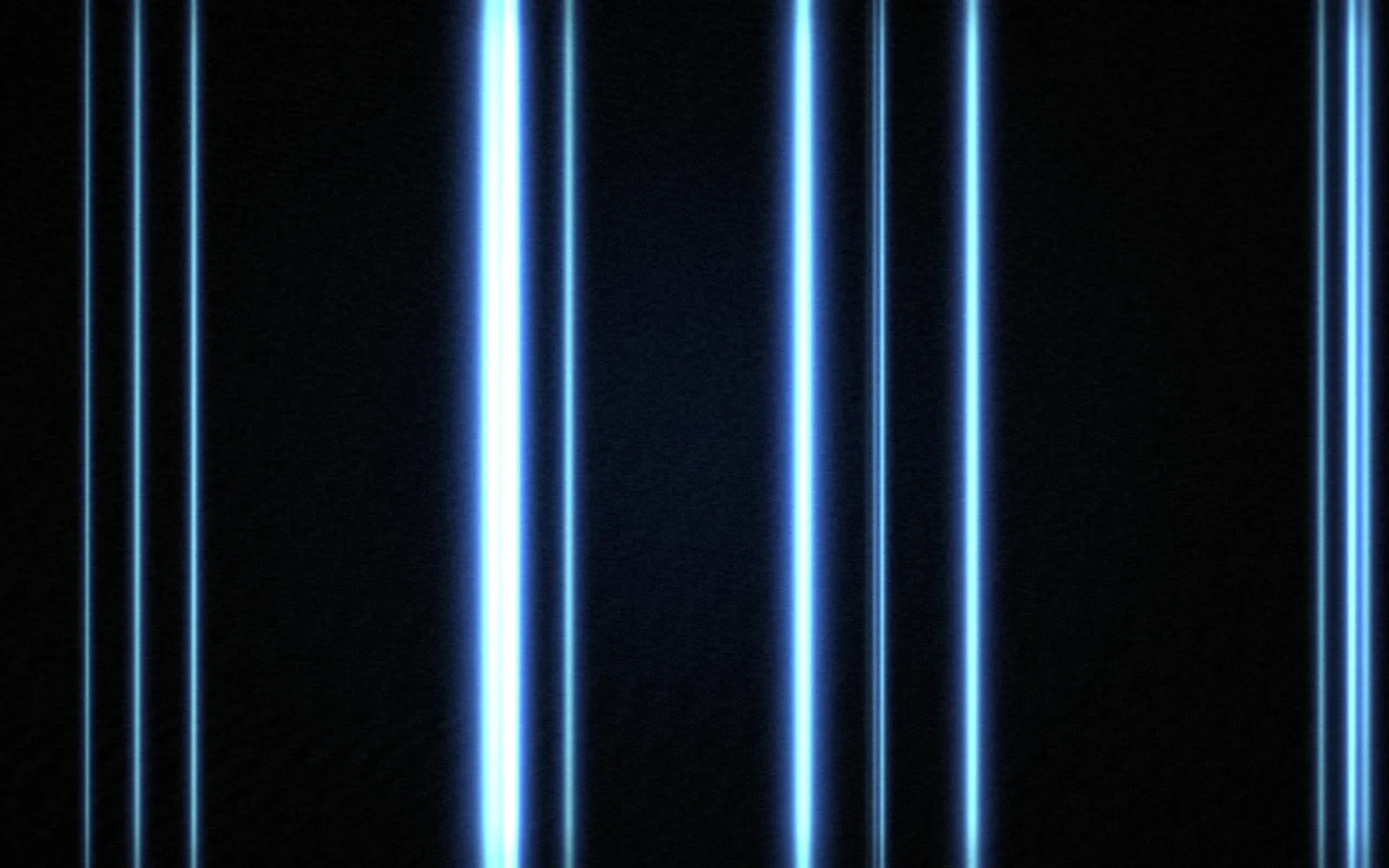
Streaks. Vertical streaks of CRT phosphor glow stand in a depth field, and the camera flies forward through them, the near ones blooming outward as they pass. Each streak rides one of the seven frequency bands. The phosphor changes color every sixteen beats, green, then a cool white, then blue, crossfaded so it never blinks. A snare flares the cores and whitens the glow, and the hi-hats coarsen the film grain laid over everything.
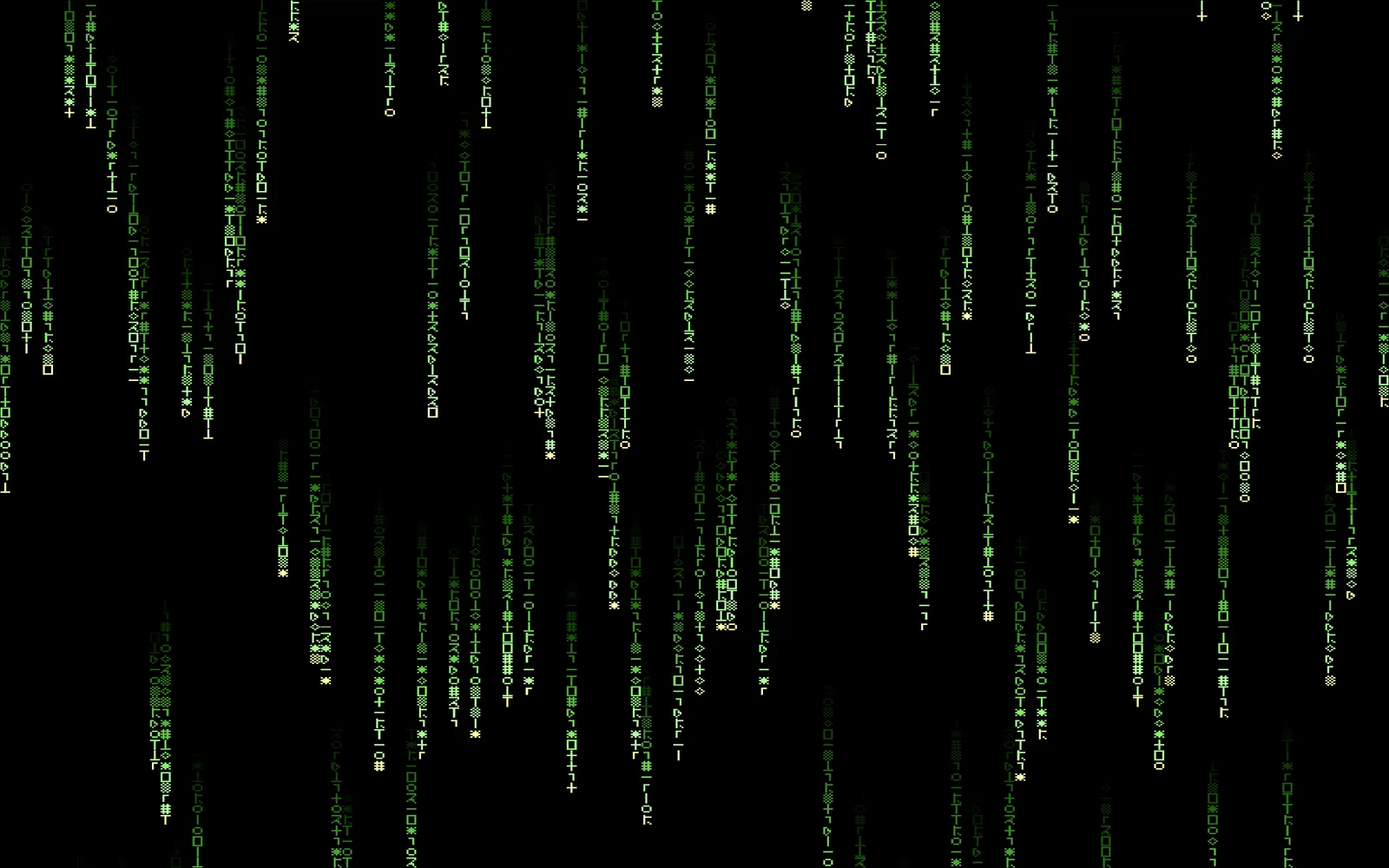
Code Rain. Columns of small hand-drawn glyphs fall down a black field, each led by a bright white-green head with a tail fading through green into black. The glyphs swap as they fall, so the columns chatter. Louder, faster music makes the shower heavier. Every kick flashes the heads, the hi-hats send waves of swaps across the field, and a snare sends a bigger wave and whitens the trails.
How Cyber plays with different music
Cyber is drawn for a steady beat. Four-on-the-floor electronic music, synthwave and anything built on a drum machine drive it the way it was designed: a lurch on every kick, a flash on two and four, glitter on the hats. The drums are found in the sound itself, by where they sit in the spectrum, so a played kit registers, not only a drum machine, and it doesn't matter which app is playing.
A quiet song with no drums still flies, at the pace of its loudness, with the flares gone. If a track feels like too much, the Intensity slider scales the levels and drums a scene reads.
Cyber flashes
Cyber answers the beat with light. Its pictures are bright lines on black, and a kick or a snare brightens them, so a busy track produces a lot of short flares. That is the style, and it isn't for everyone. If flashing light bothers you, start with Metal or Fluid, where the music moves the surface and never the light.
Where to go next
Lighting draws stage rigs, lasers, sheets of light and haze. Wire keeps the wireframes but trades the neon for seas and rolling relief. LIQUIDWAVE for Mac is a free download with two scenes, Wave and one you pick, and one purchase inside the app unlocks the rest of the 60+ scenes in ten styles, Cyber included.
macOS 14.2 or later · notarized by Apple · free
Questions
- Which scenes are in the Cyber style?
- Synthwave, Cyber World, Cyber Grid, Streaks and Code Rain: a neon grid floor under wireframe ridges, a spire at the end of a runway, a neon corridor, phosphor streaks and falling glyphs.
- Does Cyber react to the drums?
- Yes. LIQUIDWAVE hears the kick, the snare and the hi-hats separately in whatever your Mac plays. Kicks lurch the flight forward and flare the grids, snares flash the horizon, and hi-hats work on the stars, windows, grain and glyphs.
- Does Cyber flash?
- Its bright lines flare on kicks and snares, so a busy track brings a lot of short flares. The Intensity slider scales what a scene reads, and the Metal and Fluid styles keep the beat out of the light.
- Is the Cyber style in the free version?
- The download is free and includes two scenes, Wave and one you pick, with no time limit. One purchase inside the app unlocks the rest, every Cyber scene included.